Saturday, 30 January 2016

Peninsular Project part 3 The campaign continues

In part three I'm going to have a look at the campaign from mid 1808.
Things had been quiet in Portugal since the French invasion, with near to 50'000 men occupying Portugal the French had a strangle hold on the country, an outrageous levy had been placed on the country which would destroy its economy and cripple the country.
This would appear to have been Portugal's fate, had it not been for the uprising in Spain which had a knock on effect in Portugal.

Historical background 

In the north Porto had been lost to the French, when the Spanish troops mutinied and joined the local partisans. General Junot knew he had to do something, and fast if he was to hold onto Portugal, he ordered general Loision to retake Porto and crush the rebellion in the north. To do this Loision took with him between 1'800 and 2'500 men depending on the source you read.

General Loision's force:
1 battalion of the 2nd light
1 battalion of the 4th  light
50 troopers of the 5th dragoons
and 6 artillery guns and crew

A small force but all his men were veterans of many campaigns, and up till know the French had only faced local irregulars and militiamen who had ether run at the first sight of the French or had stood there ground only to be brushed aside when faced with a bayonet charge, Loision had every confidence in his ability in following his orders.
On the 17th  of June Loision left the fortress of Almeida and marched north west by the 19th he had reached the village of Lamego in the Douro valley, with only a few minor clashes with badly armed irregulars that had disappeared into the hill with the first shots from the French.
Here the French moved to the river Douro, crossing it on the 21st at the ford near the town of Regua, entering the town the same day.
At this point Loision could see the surrounding hills of the valley we full of patriots hundreds possibly thousands had joined General Fransisco de Silveira as he moved south wards to meet Loision's force coming to take Porto.
Undeterred Loision moved forward and reached the village of Teixeira where the valley stopped and the hills rose abruptly, Loision was faced with a climb up hills that, were full of partisans surrounding him on three sides. Silveira had chosen well, but Loision was still confident that he could carry the position and his men lead by the light infantry moved up the hills. As Loision had predicted the badly armed partisans ran as his veterans moved up the hill towards them, but the ground became very step, and the assault ground to a halt, as the French came under increasing pressure from the partisans many of whom were armed with muskets. Silveira had also brought two light guns with him and these may have been used at this point.  Loision was slightly wounded at this point and a number of his men were killed and wounded.

The French were forced to withdraw, and regroup at Teixeira. As more Portuguese's began to appear on the surrounding hills, Loision had to decide what to do next, should be press on against an ever growing force, or withdraw back over the river Douro. It was at this point Loision received two pieces of news the first was that his baggage train had just been ambushed at the village of Regua and worse still several regular infantry regiments had been formed in Porto, and the militia and Ordenanze were on there way possibly the very force that surrounded him in the hills. His mind was made up he would withdraw before he was cut off from Almeida.

Loision moved to Regua and then crossed the Douro on the 22nd harassed all the way by Silveira's men. He made it back to Almeida on the 1st of July losing 300 men killed or wounded plus 2 guns on the way.

 I'm going to try and recreate Loision's retreat from the village of Teixeira to the ford at Regua for my next battle.

The  French forces 


The French troops involved in this battle were all veterans. For the light infantry battalions I'm going to use one large base of 12 miniatures for each battalion and give the 2nd light infantry battalion 6 single miniatures for their skirmishers.  

some of my large bases 12 miniatures per base used as a company base in a small action battle or a centre or command base in a larger action.

 For this battle I'm going to need two battalions of French light infantry that's 24 miniatures plus another 6 single figures for the 2nds light battalions skirmishers. I have several line infantry units that i have been working on for a while, but no light infantry so its back to the painting table. For these I'm going you use Victrix miniatures. 

The 2nd light infantry and their skirmishers


The 4th light infantry 

For the artillery i used Perry's French line artillery set mounted on a large base
  
The command base Loision mounted on his trusty horse

For the dragoons I'm going to use Perry's plastic dragoons box set I'm going to mounted them as singles for this game. In a larger game they would be based on a large base with 5 miniatures and the single miniatures would be used like the small bases of infantry enabling me to change the dragoons formations, but for this game the 5 single bases will work.

The dragoons ready for action

The Portuguese forces 

General Francisco da Silveira commander of the Portuguese forces was a capable officer who new his commands weakness mainly made up of badly armed ordenanza he knew they would not stand up well against the French so he used the hills and difficult ground to his advantage some accounts state he had two light guns in his army as well as the possibility of militiamen, this dose sound about right as some of Loisions men, as well as Loision himself were wounded in the first assault on the hills around Teixeira. 
Together with the possibility of regulars marching on his position was enough to persuade Loision to retire from his position. 

I'm going to give the Portuguese the following:
General da Silveira
2 large base of militia each represents a small battalion 
1 large base of Portuguese regulars and 2 small bases (these will be diced for to see if they arrive in the battle)
20 single irregulars armed with hand weapons (divided into groups of 5)
6   single irregulars armed with muskets
1 artillery base
General Fransisco De Siliveira

Starting with the militia i have made one base of militia for the first game using a mix of plastic figure parts and painted them in white uniforms, for the other base i have found a reference to another uniform blue coat and tan trousers. I'm going to use some Victrix miniatures the new uniform will give the other militia base a unique look. Both militia units will not have any skirmishers. Militia units are not allowed to deploy skirmishers.

The first militia base
The second militia base

For the regular Portuguese i have used Warlord games Portuguese line box set I'm going to paint the unit up as the 12th line regiment. For this game im going to use a full battalion for the 12th line. This is 1 large base of 12 miniatures and two small bases of 6 miniatures this allows me to change the formation of the battalion from column to line, a full battalion could also deploy skirmisher of between 5 or 6 miniatures depending on if it is a line or light battalion. For this game the Portuguese line will not have skirmishers. The pre: reform regiments wore a dark blue jacket with white trousers in the summer and blue for winter. the shako worn in this period was the Barretina style rather like the later shako worn by the British at Waterloo. By 1810 the new stovepipe shako was issued to all Portuguese line but it took time to replace the old shako. 

The 12th Portuguese line

The irregulars both musket and pike armed and ever thing in between

I used Front Rank Portuguese artillery men and a British Victrix gun for the Portuguese artillery.

The artillery ready for action

Game 2 the retreat from Teixeira

For the game the French under Loision must withdraw from Teixeira first to the village of Regua to rescue their baggage train which is under attack from partisans and then withdraw over the ford near the village, once over the ford, the French have completed their withdraw and survived. The Portuguese for their part must do as much damage to the French force as possible or even destroy the French. 

Set up
The militia plus the artillery start the game around Teixeira once the French have vacated it. The unit of regulars will be diced for from turn 2 to see if they appear, if they do they will also appear near Teixeira. The irregulars will be positioned along the route that the French must travel to reach the village of Regua to rescue there baggage train. I'm going to place markers along the route were i think best and i will dice once a French unit or figure comes within 6" of one of these markers to see if there are any actual irregulars there, and dice to see if they are the musket armed group or the hand weapons groups. The French for their part must move in the direction of the ford or hold position, they can not move towards Teixeira. This should make for an interesting gauntlet run for the French not knowing what is around the next corner, and having to look over their shoulders for the regulars that may or may not appear from the hills behind them.
  
Battle sketch of the area the French can be seen withdrawing from Teixeira  

well that's it for part three in part four I'll post the full battle report and the next part of the campaign 
till next time. 

Friday, 8 January 2016

A small corner of Portugal terrain building for my Peninsular project

I thought I would put together a building progress report of my Peninsular projects terrain.  Having started my new project for 2016 i found that starting on a new scale "for Napoleonic's " I not only had to build the units of combatants, but i also had no terrain for the Peninsular so it was a real start from scratch project for me.
I didn't want to over do the terrain as i have very little storage space at the moment, so i would build what i needed for the scenario. In the first battle of the project. Combat in the hills. I used the old school  system of  books covered in a grey cloth, with the narrow tracks defined by small stones and sand, this worked, well if a bit messy.

The narrow tracks and hills in game 1

The open area of the battle field for game 1 I made from scratch, using polystyrene sheets glued to cardboard for strength with a central road and walls plus two roads branching off like a cross roads. The idea is this can be used in future battles in the project.

A quick guide to the building system i used for the terrain

stage 1 work out were you want your roads use PVA glue and course sand when dry paint your dark tone base colour over the roads

stage 2 paint the rest of the board and the roads, dry brush the roads in the medium tone base colour when dry use PVA glue and fine sand to cover the areas you have just painted, but not the roads.

stage 3 use your light colour base tone and highlight exposed areas and roads

stage 4 use course sand and apply in patches were you want, and use larger sand/grit  to add to areas to give a bit of interest, and there you have it nice and simple but effective. you can add trees or crops, wild grass to the board or attach your trees and grasses to separate bases so you can arrange them as you please.

next up a ford this will feature in the second battle most of the board was constructed the same way as the first broad the ford itself i made as follows.

stage 1 draw the ford and cut it out

stage 2 paint the ford with your medium tone base colour

fill the fords area with PVA but not to deep also put some PVA on the river banks use grit and large stones to form the rivers edges and the base of the ford. Apply green and blue paint to the river in streaks using the tip of a brush mix the paint with the PVA and leave to dry this will take about 3 to 4 days.

paint all the rivers banks and the exposed stones in the ford your medium base tone colour and highlight these areas with your light tone colour

a closer look at the ford

some Portuguese skirmishers dipping their toes as they cross the ford.

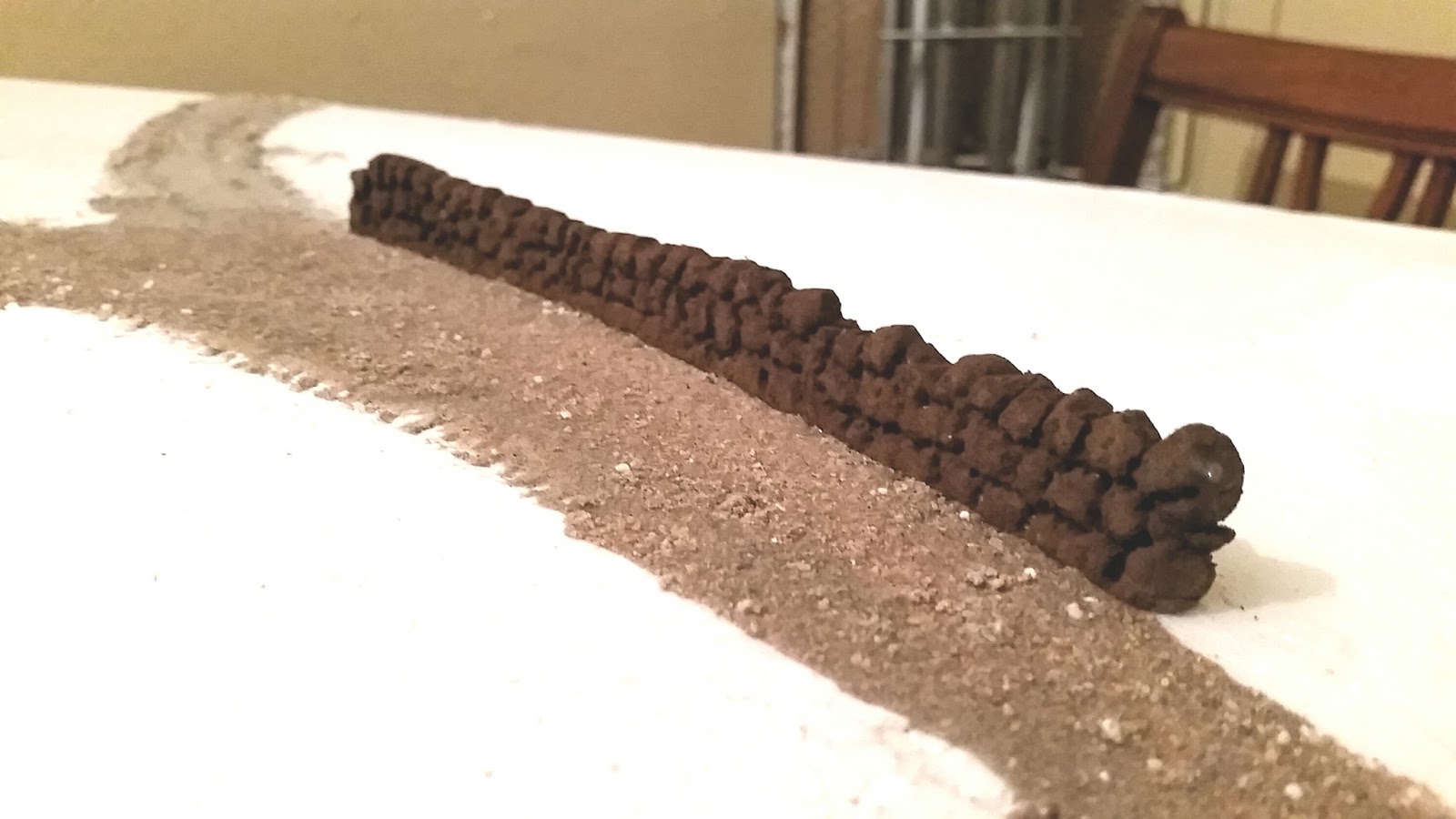
Next up some walls 
for these i use Styrofoam this comes in may size sheets and colours really useful stuff for making wall building light weight and strong.
a length of wall and the tools i use

stage 1 lightly draw out your walls i use a permanent marker pen

stage 2 roughly cut out your wall

stage 3 draw around the stones of your wall both sides so they are more defined

stage 4 cut out the top of the wall to give the wall a more realistic look

the finished look

stage 5 painting dark tone colour first then dry brush medium colour base tone  then highlight with your light tone again nice and easy but effective.  


well that's it for now its back to the painting table for me i have a few more units to paint up for the next battle of my Peninsular project and a couple of buildings to. 
till next time  


Monday, 21 December 2015

peninsular war project part 2 combat in the hills

We finished part one with the French 70th infantry about to start their assault on the gully's and the village of Castra. Lisbon is only a few miles away and if they can brake thought the enemy the Portuguese capital is theirs. General Gomes Sepulvedain, has sent general Dbalous from Lisbon in an attempt to delay the French, Dbalous has chosen the high ground near the village of Castra were the French will have to make there way up the narrow gully's towards the village. He has placed his irregulars skirmishers above the gully's so they can shoot down on the French. His plan is to trap one of the company's in the hills if he can get men behind them, even if most of his irregulars are armed only with hand weapons he will have the advantage of numbers on his side. The Lisbon militia are formed up in the farm land just outside the village they are ordered to shoot down the hopefully weakened French infantry as they make it out of the tracks

TURN 1 to 3

The Lisbon militia move out of Castra to meet the French, being militia they will be better armed and trained than the irregulars but they can only fire one volley per turn. Trained/veteran regulars such as the French can fire in each of their phases.

The 1st company of the 70th deploys on the left. The outskirts of Castra can be seen in the distance.

The 2nd company of the 70th deploys on the right irregular partisans can be seen on the high ground.

with all of their skirmishers deployed, together with their NCO, the skirmishers can know act independently, and can move any distance from their parent company base.
TURN 4 to 6

On the right flank the skirmishers of the 2nd company start to move up the gully.

 Strait into a fire fight with the partisans on the high ground.

The floor of the gully is soon covered with gun smoke as the skirmishers and the irregulars trade shots. taking fire from both sides the French are easy targets for the irregulars, lucky for the French the irregulars are not very good shots.

Sporadic musket fire in the left gully, but the 1st companies skirmishers make good progress.
TURN 7 and 8

one of the groups of partisans waiting on the high ground 

More irregulars on the high ground on the left flank of the French make there move, and start to move around the unsuspecting French.

Having managed to get a party of irregulars around 1st company the trap is set.

TURN 9 and 10 

1st company is attacked from all sides as the irregulars move in for the kill. Their skirmisher run for the relative safety of their company.

1st company is forced to fight for its life, casualties are high on both sides

On the right flank 2nd companies skirmishers have almost made it to the top of their gully, all the skirmishers are still standing but only just, most have between 1 and 2 wounds.

TURN 11 to 13

Having finally reached the top of their gully 2nd companies skirmishers hold their breath, Their quick thinking NCO can see the fate of their comrades in the other gully, and orders his men to attack the irregulars from behind. 


Its the irregulars turn to be trapped, with casualties mounting and the 2nd companies skirmishers know in combat with them, the irregulars morale is broken and they start to run, just as 1st company also has to take a morale test , but they pass even though they have taken many casualties including all their skirmishers. 

Both companies of the 70th make it out of the gully's. The 3 remaining skirmishers of the 2nd company move out once more.

As the French companies make it onto the open ground the militia opens up with a volley at the already weakened 1st company men fall and they have to take another morale test, they pass yet again although they are shaken.

TURN 14 and 16

Being only allowed to fire one volley per turn the militia withdraw a little in there next phase. The two companies move forwards 2nd company fires a volley at the militia which bring down several men 1st company are shaken so they don't fire. (shaken units can only fire once per turn) The skirmishers push the irregular skirmishers through the vineyard.

Another volley from the militia and more French men fall this time in the 2nd company but they shrug this off and move to take over the final assault on the village from the shaken 1st company.
militia and shaken units have to target the nearest enemy so they could not fire at the shaken 1st company. 

With the 2nd company troops know moving on them and the last of the irregulars skirmishers being chased from the vineyard the militia have no choice but to withdraw towards the villages outskirts.

The militia have know withdraw into the village but with the 70th line are right behind them, moments later the militia brake and run.

A hard fight, harder than the French anticipated. Dbalous plane almost worked, if the 2nd companies skirmishers had not come to their aid then 1st company would have been destroyed for shore, and the 2nd company may have had to withdraw, if only Dbalous had some regulars with him. The iron discipline of the French veterans is what made the difference, 1st company had to take 2 morale tests and passed both all be it the second leaving them shaken, but still standing. despite being veterans the French skirmishers found it very difficult to hit the irregulars in the cover of the hills, just how it should have been. A good game and a great start to the campaign.

The campaign continues 

The road to Lisbon is know clear and General Junot made it only to find he had missed his prise the royal family having left a few days earlier.   
French troops march through Portugal heading for Lisbon

With the Portuguese capital know under French control and Spanish troops heading into Portugal things could not have looked worse for the Portuguese, but for events elsewhere were about to change the war not only in Portugal but the rest of Europe.

Napoleon had moved fast on his plan to dominate the Iberian peninsular. By early 1808 he had moved large numbers of troops into both Portugal and Spain. and know he made his move. Forcing King and his son to renounce their throne and placing his brother Joseph Bonaparte on the Spanish throne, Napoleon had taken control of both Portugal and Spain or so he thought. on the 8th of May Madrid and shortly After Spain exploded in revolt, and civil unrest. Many French troops found themselves fighting large numbers of partisans.
By June news of the Spanish revolt had reached Portugal. The Spanish corps in Porto mutinied and joined the local patriots, and the Portuguese flay once again flown over Porto.
All over Portugal Spanish troops were leaving for home, and to make things worse thousands of Portuguese were joining the militia and the ordenanza.

Junot's army had shrunk to just the original 25'000 mainly French troops in a mater of weeks, as long as he kept the communication lines with Spain open and held the main cites and fortresses under French control he could hold the country.
To do this he had to strengthen the fortresses and take back Porto.

In part three of the project I'm going to take a closer look at the battles between the Porto partisans and General Loison.

This is going to be my last post for this year, thanks for all your comments till next time and next year.